Is your dog itchy, experiencing an upset stomach, or having recurring loose stools? Sometimes, what your dog eats may play a role. Food sensitivities in dogs can show up in several different ways, and the symptoms can easily be mistaken for other health issues.
In this guide, we’ll go through the most common signs of food sensitivity in dogs, explain what hypoallergenic dog food and monoprotein dog food mean, and discuss what to do if you suspect your dog is reacting to their food.
Possible signs of food sensitivity in dogs include recurring digestive problems, changes in stool, itching, and skin or coat problems.
Because the same symptoms can have many other causes, persistent or severe symptoms should always be discussed with a veterinarian.
Common signs of food sensitivity in dogs
How can you tell if your dog’s food isn’t agreeing with them? There is no single symptom that can confirm that food is the cause. However, certain recurring problems may be worth investigating further.
1. Digestive problems
Recurring gas, abdominal discomfort, vomiting, or diarrhea may indicate that your dog’s digestive system is not functioning optimally. However, digestive problems can have many different causes, ranging from a sudden change in diet to underlying illness.
2. Changes in stool
Keep an eye on your dog’s stool. If it is frequently loose, varies considerably in consistency, or your dog needs to go outside more often than usual, it may be worth investigating the underlying cause.
3. Itching and skin problems
If your dog frequently scratches, licks, or chews their paws, legs, or other areas of the body, they may be experiencing a skin problem. A reaction to food is one possible cause, but itching can also be caused by parasites, infections, or environmental allergies.
4. Changes in the coat
The condition of the skin often affects the coat as well. Dry skin, dandruff, or a dull coat may occur alongside other skin problems. A balanced diet that meets your dog’s nutritional needs is an important part of maintaining healthy skin and coat.
Why does the protein source in dog food matter?
Protein is an essential part of a dog’s diet. It provides amino acids that the body needs for muscles, tissues, and many other important functions.
When investigating a possible food allergy or food sensitivity in dogs, the protein source is particularly relevant, as immune-mediated food reactions are usually directed at proteins.
Dog foods containing carefully selected or fewer protein sources can therefore be useful when you want greater control over what your dog eats. Alternative protein sources such as venison, duck, or insect protein may also be worth considering, depending on which proteins your dog has previously eaten.
However, this does not mean that one particular protein source will automatically be suitable for every sensitive dog. Your dog’s individual needs and previous diet also matter.
What is hypoallergenic dog food?
Hypoallergenic dog food is formulated with the aim of reducing the risk of reactions to ingredients in the food. However, the exact composition and ingredients of hypoallergenic foods can vary between products.
For this reason, it is a good idea to look at the complete ingredient list and nutritional composition rather than choosing a food based solely on the word “hypoallergenic”.
What does monoprotein dog food mean?
Monoprotein dog food uses one main source of animal protein. This can make it easier to keep track of which animal proteins your dog is eating.
A monoprotein diet can be particularly useful when you want to avoid certain protein sources or when you are working with your veterinarian to determine whether your dog’s symptoms may be linked to their diet.
How does an elimination diet for dogs work?
An elimination diet is a structured way to investigate whether your dog’s symptoms could be related to their food.
During an elimination diet, the dog is fed a carefully selected diet for a specified period, avoiding ingredients or proteins that they may previously have reacted to. The diet needs to be followed consistently: treats, chews, table scraps, and flavoured supplements can all affect the results.
If the symptoms improve during the elimination diet, the next step may be to reintroduce previous ingredients under veterinary guidance to see whether the symptoms return.
If you suspect your dog has a food allergy, an elimination diet should be planned together with a veterinarian. Your veterinarian can also help rule out other possible causes of symptoms such as itching, diarrhea, or skin problems.
Three Alvar Pet recipes for different needs
Dogs are individuals, and there is no single food that is suitable for everyone. Alvar Pet offers different options designed with different needs and protein sources in mind.
Alvar Pet Sensitive/Venison
Sensitive/Venison is an option for dogs when you want to choose a food containing venison as its protein source. It may be an interesting choice when you are looking for an alternative protein source for your dog.
Alvar Pet Digestion/Duck
Digestion/Duck is designed with dogs with sensitive digestion in mind and uses duck as its protein source. It is an option when supporting digestive health is a particular priority in your dog’s diet.
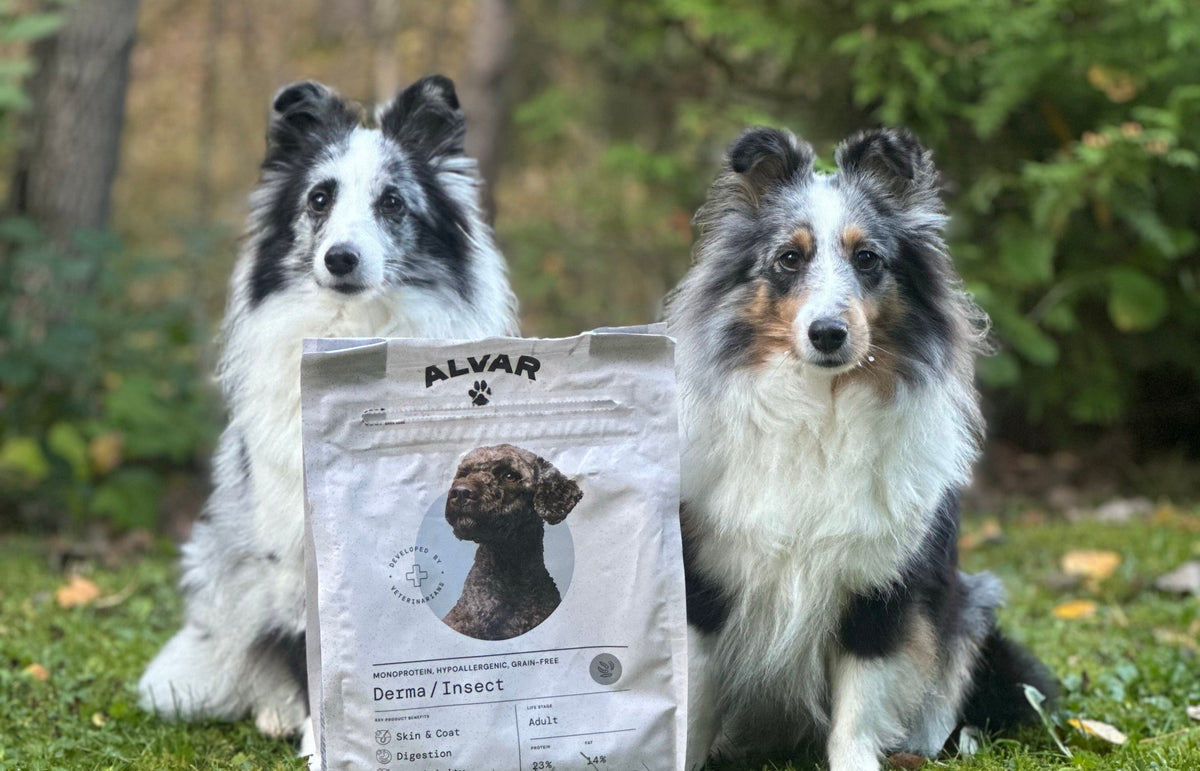
Alvar Pet Derma/Insect
Derma/Insect contains insect protein and is an option for dogs with specific skin and coat needs, or when you want to choose a less commonly used protein source.
The most suitable food will always depend on your dog’s individual needs. If your dog has a diagnosed food allergy or recurring skin or digestive problems, the choice of diet should be discussed with your veterinarian.
How to change your dog’s food gradually
When introducing a new dog food, it is usually best to make the transition gradually. A sudden change in dog food can itself cause temporary digestive problems, making it more difficult to assess how your dog is actually responding to the new food.
A gradual transition could look like this:
- Days 1–2: approximately 25% new food and 75% previous food
- Days 3–4: approximately 50% new food and 50% previous food
- Days 5–6: approximately 75% new food and 25% previous food
- Day 7: 100% new food
Some dogs may need a slower transition. Keep an eye on your dog’s digestion and overall wellbeing, and adjust the pace if necessary.
Important: If your dog is following a veterinarian-supervised elimination diet, follow your veterinarian’s instructions instead of a standard food transition plan.
Explore Alvar's options for sensitive dogs
The right diet can make a significant difference to everyday life when your dog has specific dietary needs. With Alvar Pet options containing venison, duck, and insect protein, you can look for a recipe that suits your individual dog.
Explore Alvar Pet’s hypoallergenic dog food options and find the right choice for your dog →
Frequently asked questions about food sensitivities in dogs
Recurring diarrhea or other changes in stool, digestive problems, itching, and skin issues can occur with food reactions. However, the same symptoms can have many other causes, so persistent problems should be assessed by a veterinarian.
With a food allergy, the immune system is involved in the reaction. Food intolerance and other forms of food sensitivity are not necessarily immune-mediated and may, for example, cause digestive symptoms.
It depends on what is causing your dog's symptoms and how the food is formulated. A diet containing carefully selected protein sources may suit some dogs, but persistent digestive problems should always be investigated by a veterinarian.
Monoprotein dog food contains one main source of animal protein. This makes it easier to monitor and control which animal proteins your dog consumes.
It is usually not possible to determine which protein your dog reacts to based on symptoms alone. A veterinarian-supervised elimination diet followed by a controlled reintroduction is an established way to investigate suspected food reactions.